
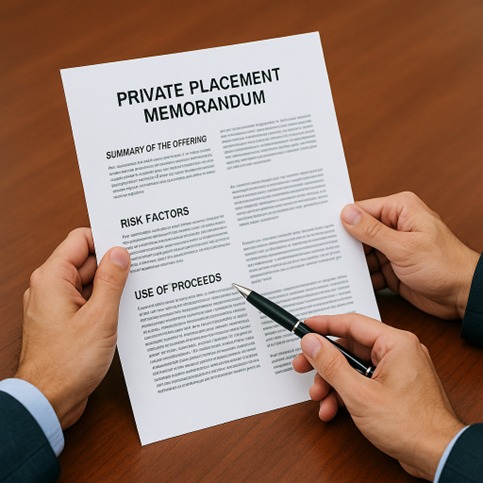
Understanding what your private placement memorandum (PPM) must include to build trust and legally raise capital.
Raising capital legally starts with trust—and trust begins with transparency. For sponsors, fund managers, and founders navigating the private markets, a well-drafted Private Placement Memorandum (PPM) is the cornerstone of a compliant and compelling investor offer. But what exactly are investors expecting to see in a PPM?
In this blog, we’ll break down the essential contents of a PPM from an investor’s perspective. Whether you’re launching a real estate syndication, a private fund, or a startup, knowing what to include (and why) can make or break your raise.
What Is A PPM And Why It Matters To Investors
A Private Placement Memorandum (PPM) is a legal disclosure document used to provide potential investors with material information about a private securities offering. Unlike a pitch deck or brochure, a PPM is a legal document that outlines the terms of the offering, risks, business model, use of funds, and investor qualifications.
Why investors care:
- Risk Mitigation: They want full transparency before putting in capital.
- Legal Protection: A properly drafted PPM shows the sponsor is playing by the rules.
- Clarity: Investors want to understand where their money is going, and what they’re getting in return.
Failing to include certain sections or using vague language can spook sophisticated investors and potentially expose you to legal claims.
1. Executive Summary And Offering Terms
Investors expect to see a clear, concise overview of the deal at the start of the PPM. This includes the type of investment vehicle (LLC, LP, etc.), minimum investment amounts, projected returns, and how the sponsor is compensated.
What to include:
- Name of the issuing entity
- Purpose of the raise
- Minimum and maximum offering amount
- Price per unit/share
- Use of proceeds breakdown
- Investment term (length of the deal)
- Sponsor fees (acquisition, management, disposition, etc.)
Tip: Be precise. Avoid phrases like “high returns” or “minimal risk”—investors prefer realism and specifics over hype.
2. Detailed Use Of Proceeds
One of the most scrutinized sections in a PPM is the breakdown of how the capital will be used. Investors want to know where every dollar is going, including for operations, property acquisition, working capital, legal fees, etc.
Why this matters:
It helps investors assess the soundness of your business plan and whether your capital needs align with your goals.
Example layout:
- 60% for property acquisition
- 20% for renovations
- 10% for reserve funds
- 5% for legal and compliance
- 5% for marketing and investor relations
Transparency in this section builds confidence and avoids accusations of misappropriation later on.
3. Risk Factors (Yes, All the Ugly Stuff)
This is where investors expect brutal honesty. Every PPM should include a thorough “Risk Factors” section that covers things like market risk, management risk, operational risk, liquidity risk, and legal risks.
Why investors expect this:
They know every deal has risks. What they want is to see that you’ve thought them through and disclosed them responsibly.
Common inclusions:
- No guarantee of returns
- Illiquid nature of investment
- Market downturns
- Loss of key personnel
- Potential regulatory changes
A strong Risk Factors section shows professionalism and helps protect both the investor and the issuer (your company) from misunderstandings.
Pro tip: Avoid boilerplate or overbroad language copied from templates.
4. Legal Structure, Rights, And Restrictions
Investors want clarity on the legal structure of the offering, whether it’s an LLC, LP, or another entity, and what rights they have.
What to include:
- Type of securities offered (e.g., membership interests, limited partnership units)
- Voting rights (if any)
- Transfer restrictions (Can they sell or transfer their interest?)
- Priority of payouts
- Exit strategy (e.g., refinance, sale, wind-down)
Pro tip: As always, avoid boilerplate language copied from templates. Tailor these sections to your actual deal structure to avoid confusion or disputes later.
5. Management Team And Track Record
This is your chance to build credibility. Investors expect to see bios of the general partners or managing members, their relevant experience, and a summary of past deals (if any).
Include:
- Names and bios of key players
- Roles and responsibilities
- Summary of past projects (ideally with numbers)
- Any potential conflicts of interest
Investors are not just betting on the deal, they’re betting on you. Show them you’re capable and trustworthy.
6. Subscription Instructions And Investor Qualifications
At the end of the PPM, investors expect to see the exact steps required to invest. This often includes a separate subscription agreement and investor questionnaire.
Key elements:
- How to submit funds (e.g., wire instructions)
- How to fill out the subscription agreement
- Confirmation of accredited investor status (per Rule 506(c) or 506(b))
- Deadlines for participation
- Contact information for questions
Why it matters:
Even a well-written PPM won’t convert if investors are confused about how to participate.
7. Compliance Disclosures And SEC Exemption
Investors familiar with securities law will look for confirmation that your offering is being conducted under a valid SEC exemption, typically Regulation D, Rule 506(b) or 506(c).
What to include:
- Statement of exemption from SEC registration
- Type of Reg D exemption being used
- How general solicitation rules are being followed (especially for 506(c))
- Filing confirmation of Form D
Even if your investors aren’t lawyers, this section signals that you’re raising money legally, which is a major trust builder.
Final Thoughts: Investors Expect Professionalism, Transparency, And Compliance
If your PPM feels like an afterthought or a generic template, investors will notice, and they may walk away. Today’s capital raisers are competing not just on returns, but on legal clarity and ethical transparency.
When done right, a well-structured PPM:
- Builds investor trust
- Reduces the risk of future disputes
- Keeps you compliant with securities laws
- Increases your chances of successfully raising capital
And it starts with knowing exactly what investors want to see.
Book A Free Strategy Call To Get Your Legal Docs In Place
Let PPM LAWYERS help you create a custom, legally sound PPM that investors can trust.
Book a Free Strategy Call to Get Your Legal Docs in Place
 Ajith Joseph
  Consult With William
  Joe McNulty
  Archimede LaLuce
  Danish Zahur
  Gary Murphy
  Vince Baiera
  Billy Walsh
  Howard Akin
  Jeff Embry
  Jaime Dermody
  Jean Klinkhamer
  John Rubino
  AnabelleLipton
  Matt Martin
  DOUGLAS MUIR